Enabling Party Profiles within Partiful
Comforting introverts to be more confident in RSVPing to events

Timeline
April - June 2026
Role
Product Designer
Skills
User Research, Product Thinking, Prototyping, Figma
Team
Ann Yang, Justin Young
Problem Statement
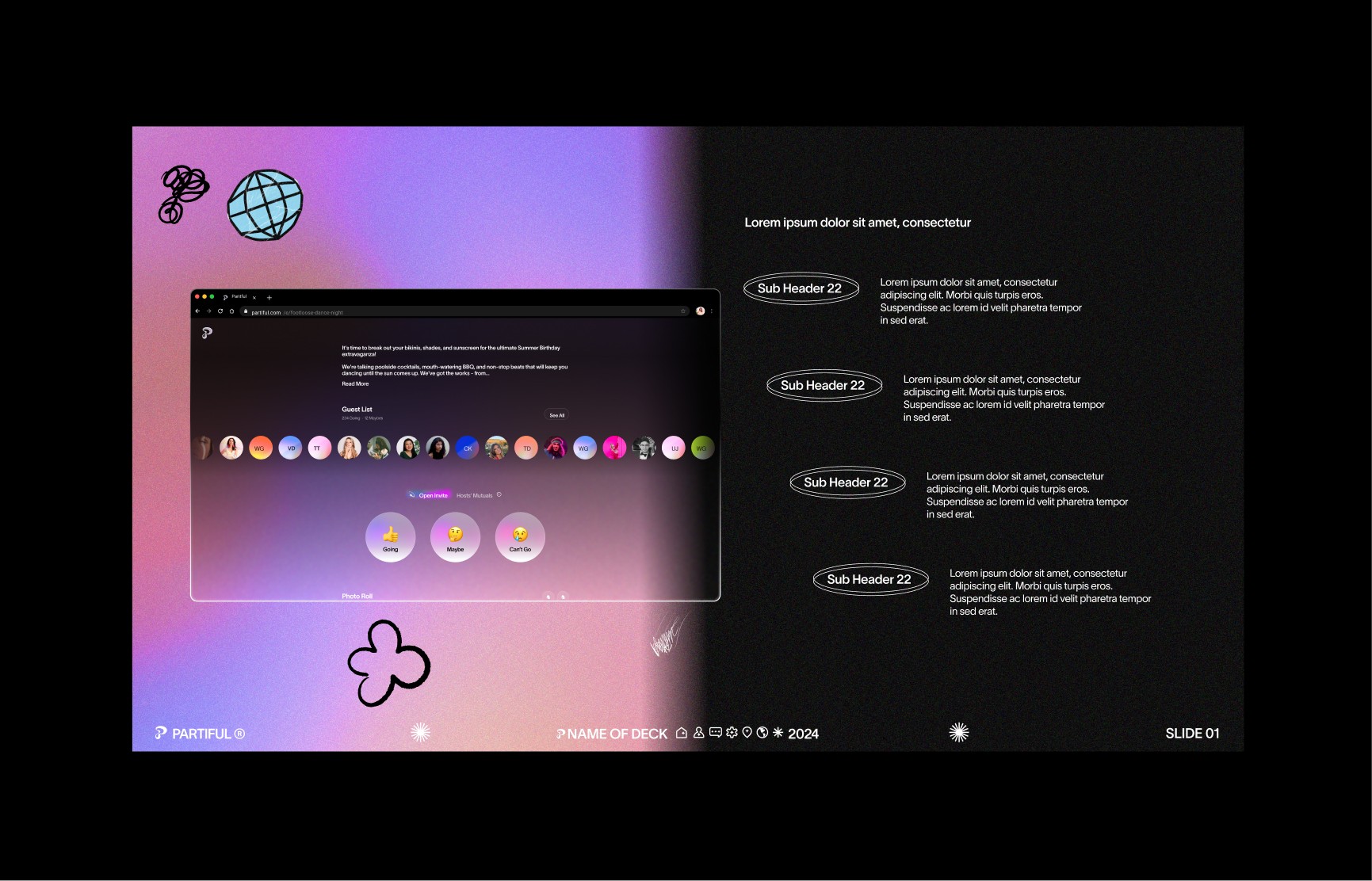
Introverted college students (18-23) often hesitate RSVPing to events because they lack the information and social context needed to assess whether an event feels comfortable and manageable. This uncertainty leads to missed social opportunities for connection and a pattern of avoidance that can weaken their sense of belonging.
📐 Lo-fis/Mid-fis
- Introduces a reusable profile attendees carry across events. Feels lightweight and guided, not formal.
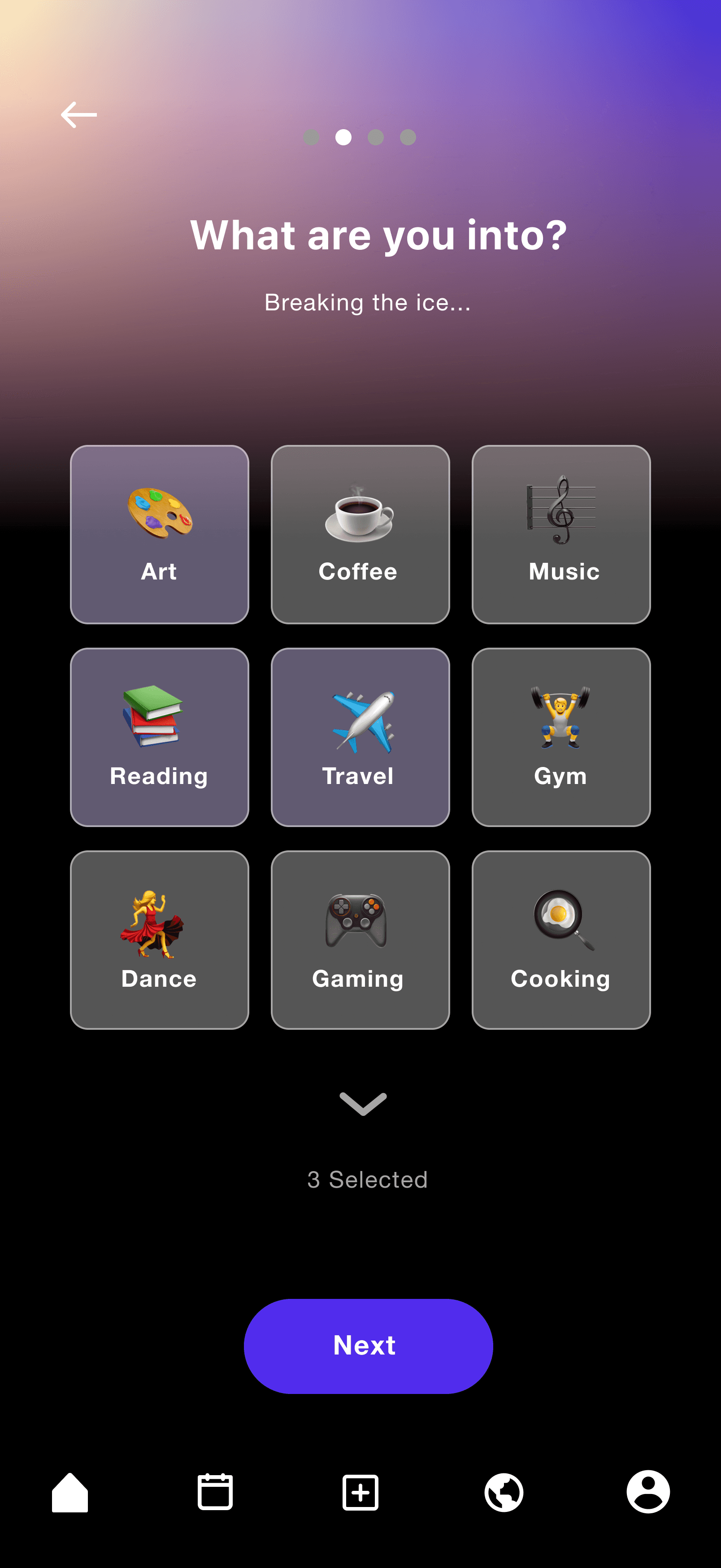
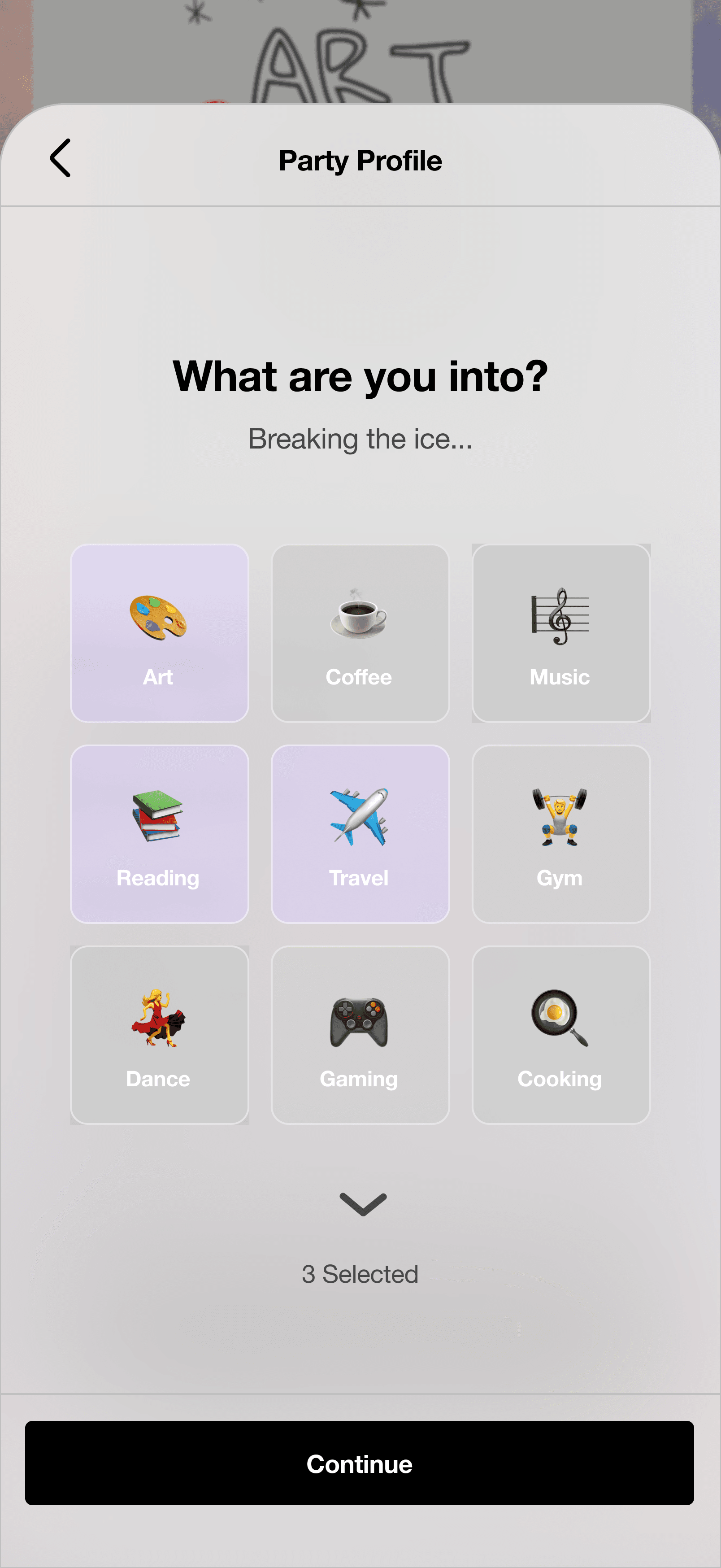
- Multi-select interest cards that double as icebreakers and surface shared connections between attendees.
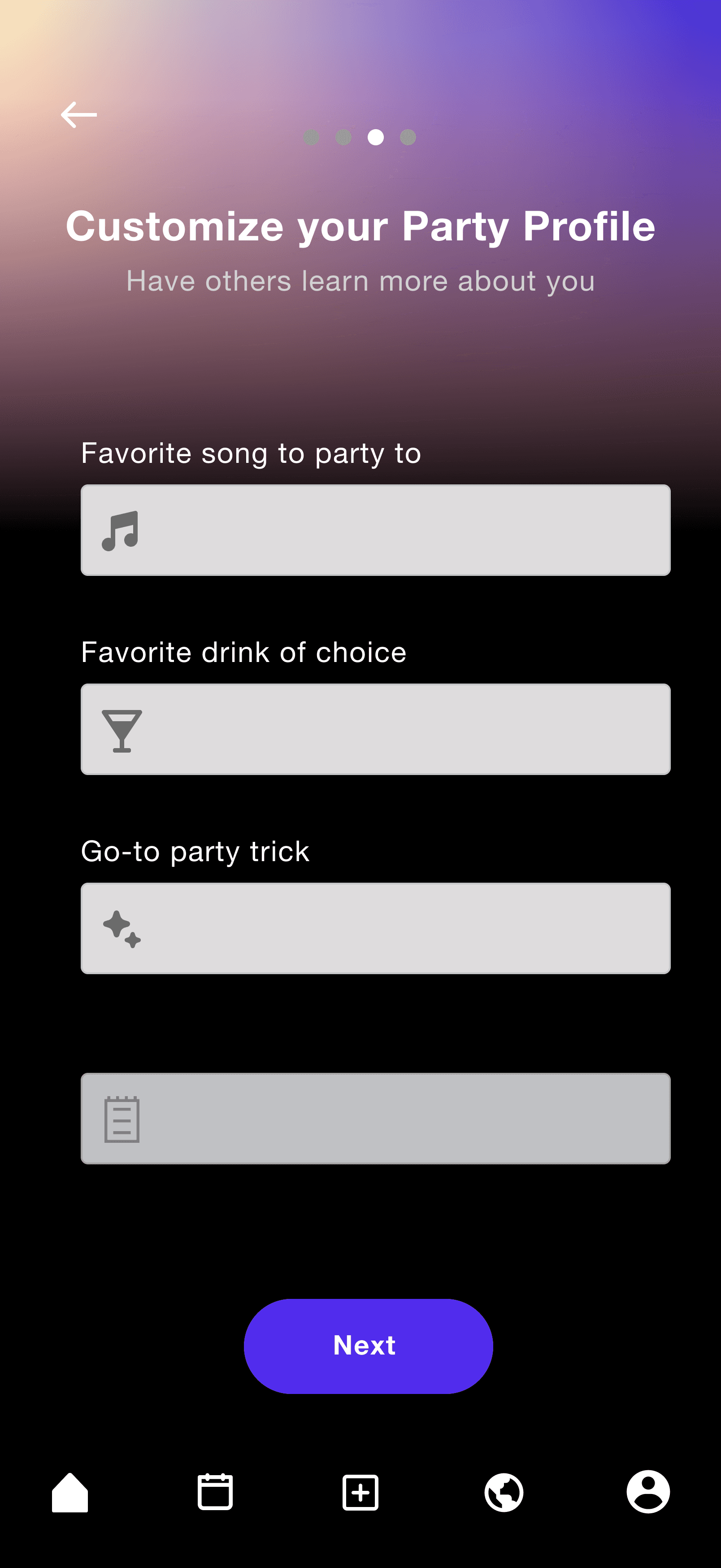
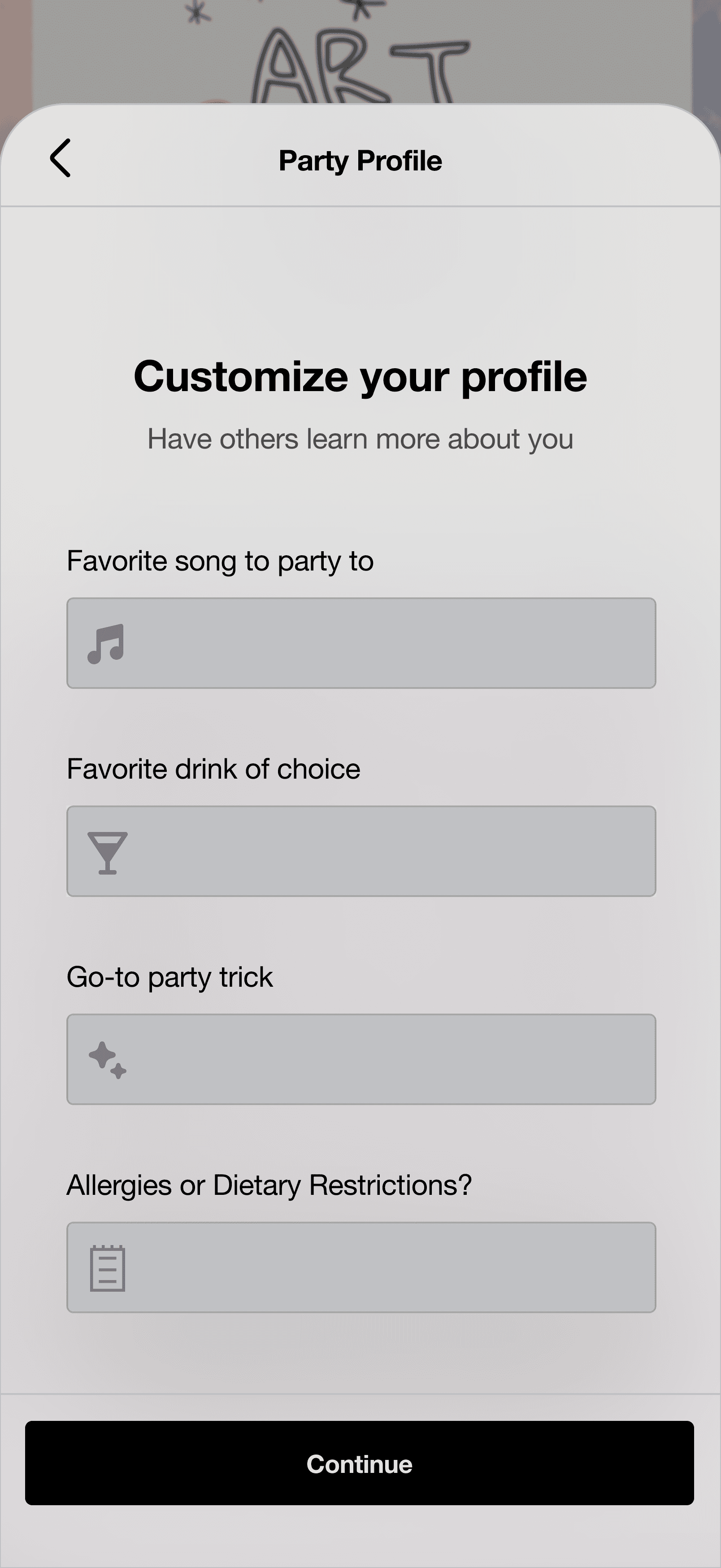
- Playful fill-in prompts (favorite song, party trick) that build authentic personality cues without feeling like a bio.
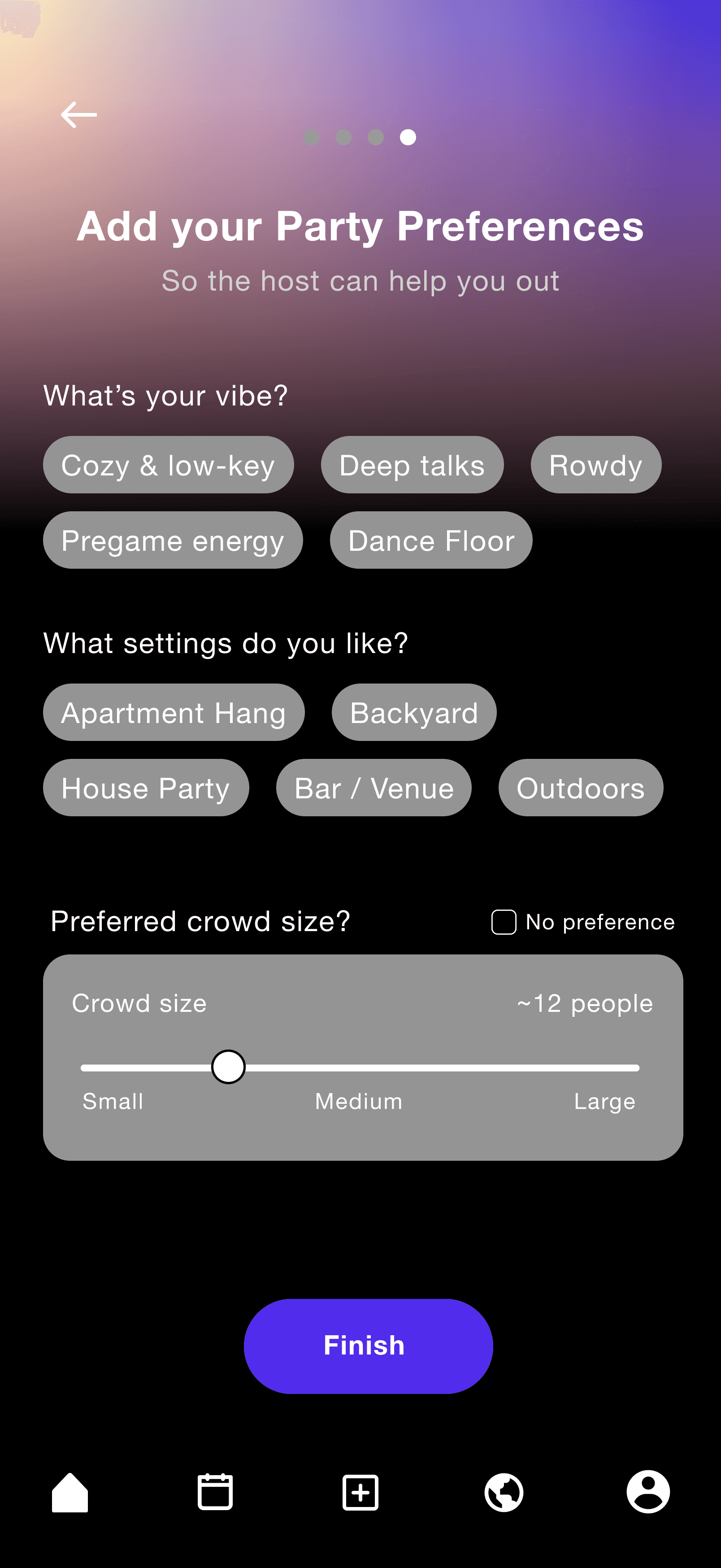
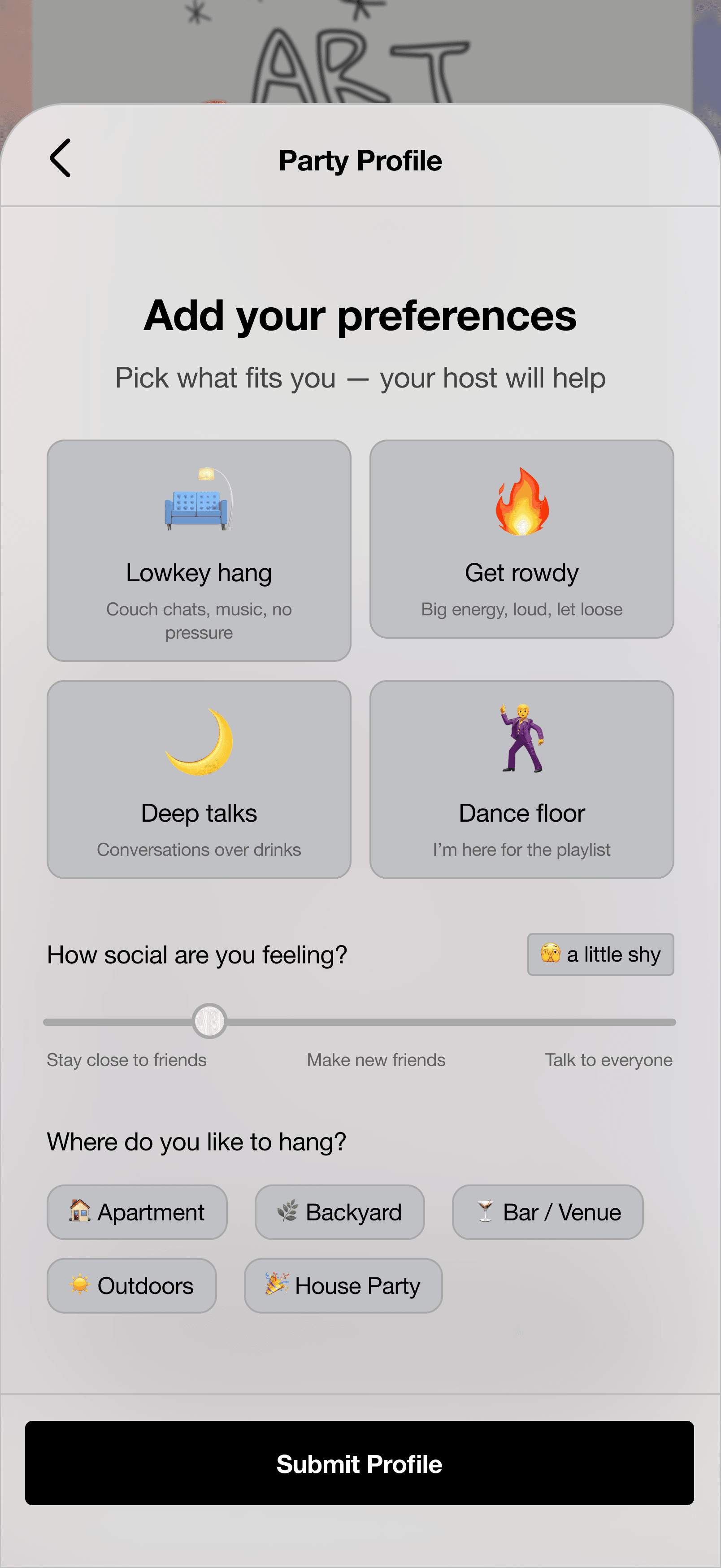
- Vibe tags, setting picks, and crowd size controls that match attendees to events that fit their energy.
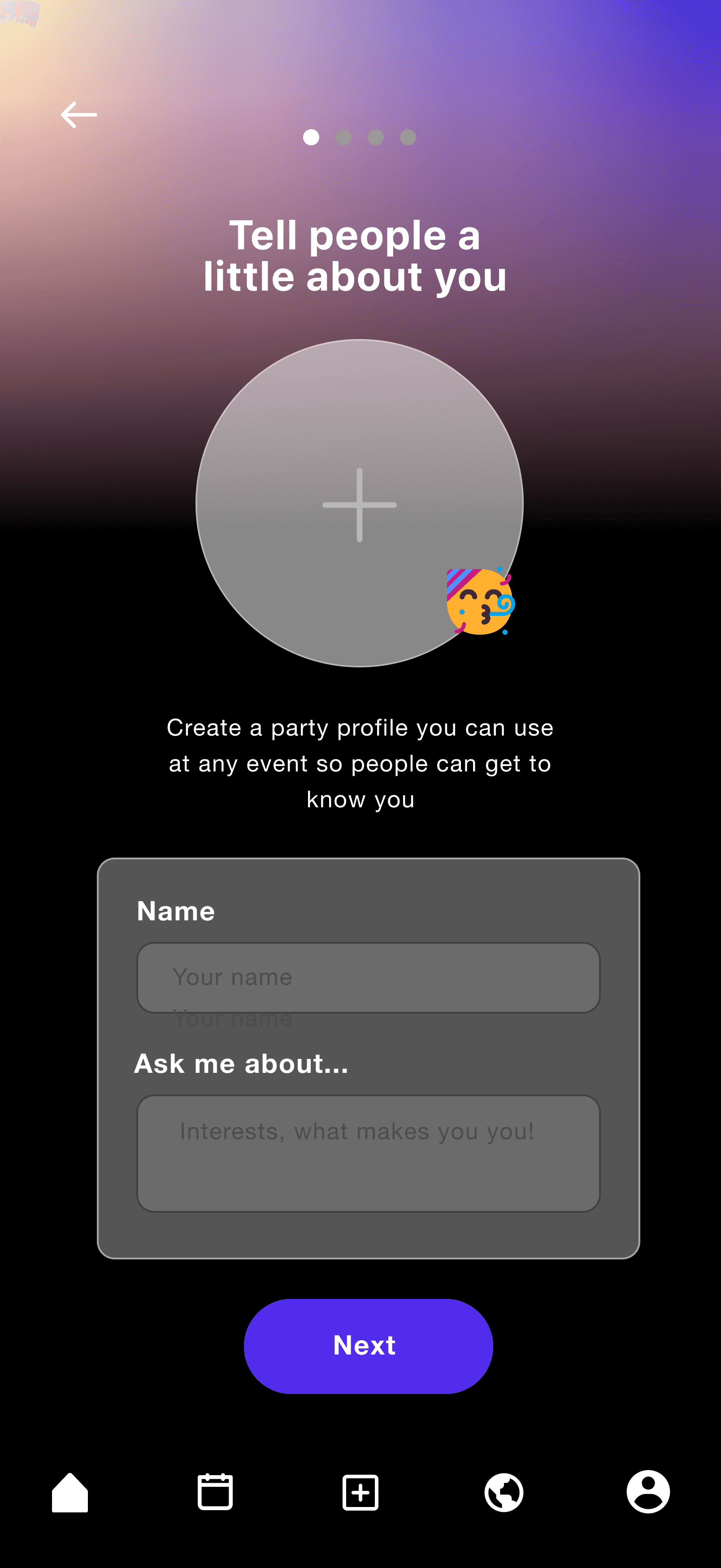
🎨 High-Fidelity Prototypes
- A tappable emoji card grid (art, coffee, music, travel, etc.) that replaces manual input with quick visual picks — turning interests into instant social signals for icebreaking at the event.
- Uses selectable chips for vibe and setting preferences, plus a crowd size slider — shifting focus from identity to comfort and host utility.
- Swaps preset interest chips for open-ended prompts (favorite song, drink, party trick) to surface more personal conversation starters.
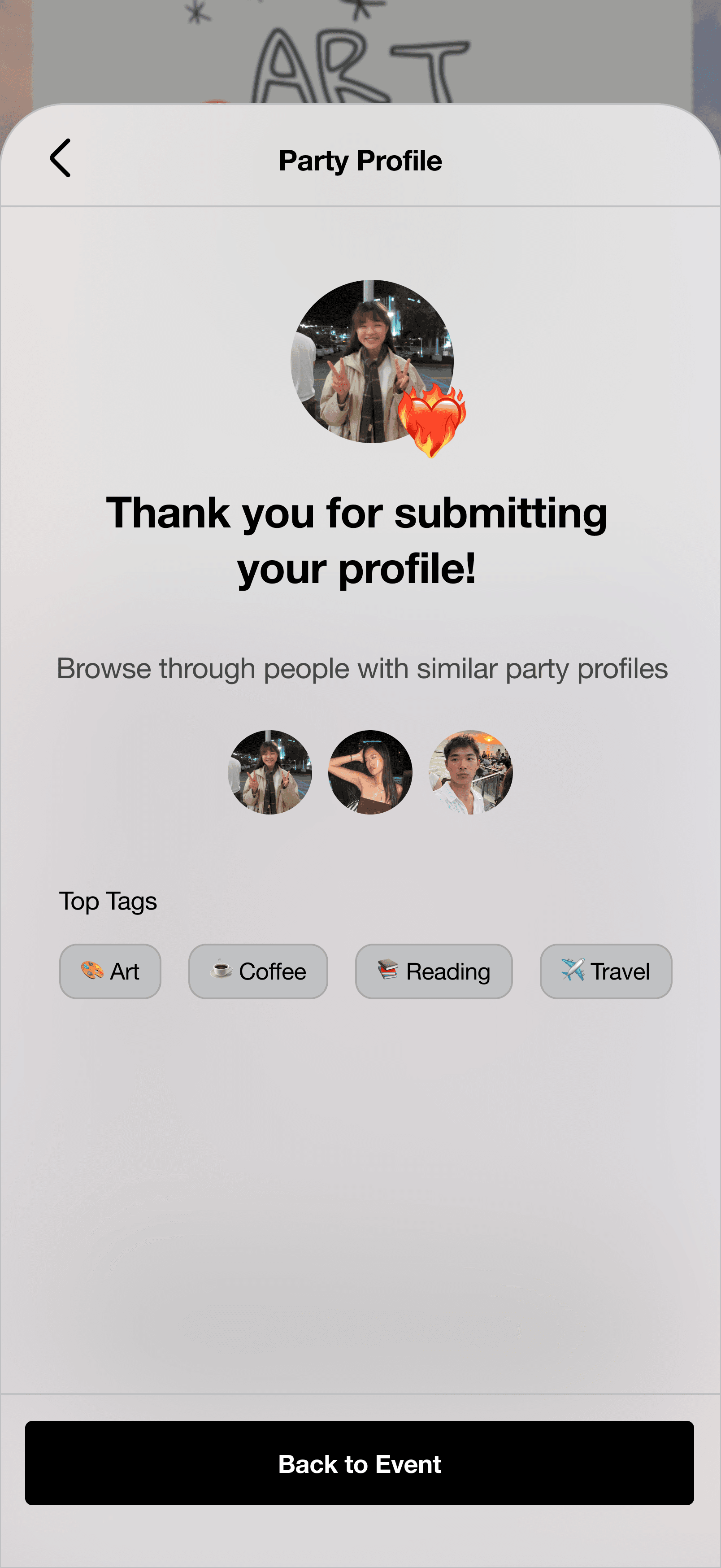
- Closes the flow with a profile confirmation that previews similar attendees and top tags, giving users an immediate sense of the profile's social payoff.
🧪 User Testing Results
- Both appreciated the visual polish compared to Prototype 2's darker aesthetic
- Preset chips are a good starting point, but participants wanted the option to type custom responses for more niche interests
- It works when it feels optional or post-RSVP, but feels frustrating when it interrupts the main action
- Both saw value in browsing other guest profiles, but the feature needs to be framed carefully. It should feel like light social context, not formal matching or stalking.
🔄 Before and After
Now I'll walk you through the key design decisions made between our mid-fi and final hi-fi screens. Across both screens, the changes reflect two consistent themes:
Making the visual experience feel cleaner and more grounded
Making each interaction feel more intuitive and emotionally relatable for guests — especially those who are more socially hesitant.


Reflection
I'm super happy to have had COGS127 as my final class at UCSD, especially considering I was able to leave with this completed case study that would usually take more time if it were on my own schedule.
It was truly refreshing to walk through the design process slowly and be held accountable to collecting real user insights through user research and user testing. What I loved most about revisiting this process is having the creative freedom to select a user group and problem to solve.
Additionally, I loved working with Partiful's Design System. It was fun leaning into a colorful yet toned down trend that Partiful executes so well for their audience to enjoy and create fun party invites.
© 2026